Dyers Woad
Isatis tinctoria
Plants that have a reasonable distribution in Utah, but do not occur everywhere. These should be given a high priority for control.
Cost share may be available. This is one of our high priority weeds. See if you qualify for assistance.
Background
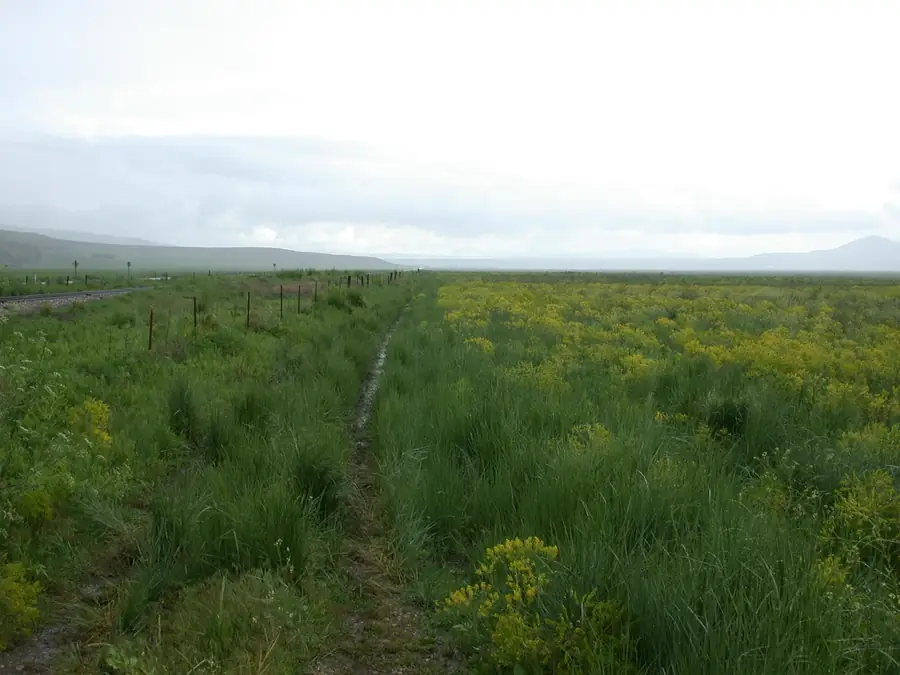
Dyers woad was introduced from Europe for production of textile dyes. It thrives in waste areas, gravel pits, road sides, pastures, field edges, and disturbed soils.
Description
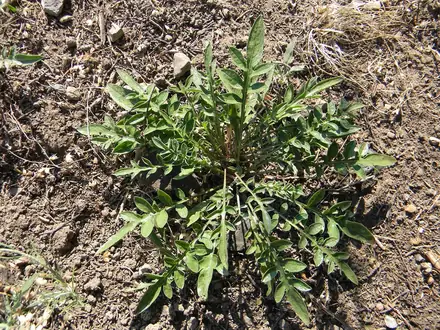
Dyers woad may be a winter annual, biennial, or a short- lived perennial. Heights of 1 to 4 feet are common. A thick tap root may penetrate to 5 feet deep. Leaves are blue-green with a whitish midrib. The bright yellow, four-petaled flowers bloom and are highly visible in late spring. Club-shaped seed pods each produce a single seed. As the fruits mature, they turn from green to dark brown or nearly black.
Control
Biocontrol rust fungus is naturally wide spread and other agents are currently undergoing research. Herbicides can offer good to excellent control when applied to rosettes in spring and fall and during pre-bloom. Digging offers good control.