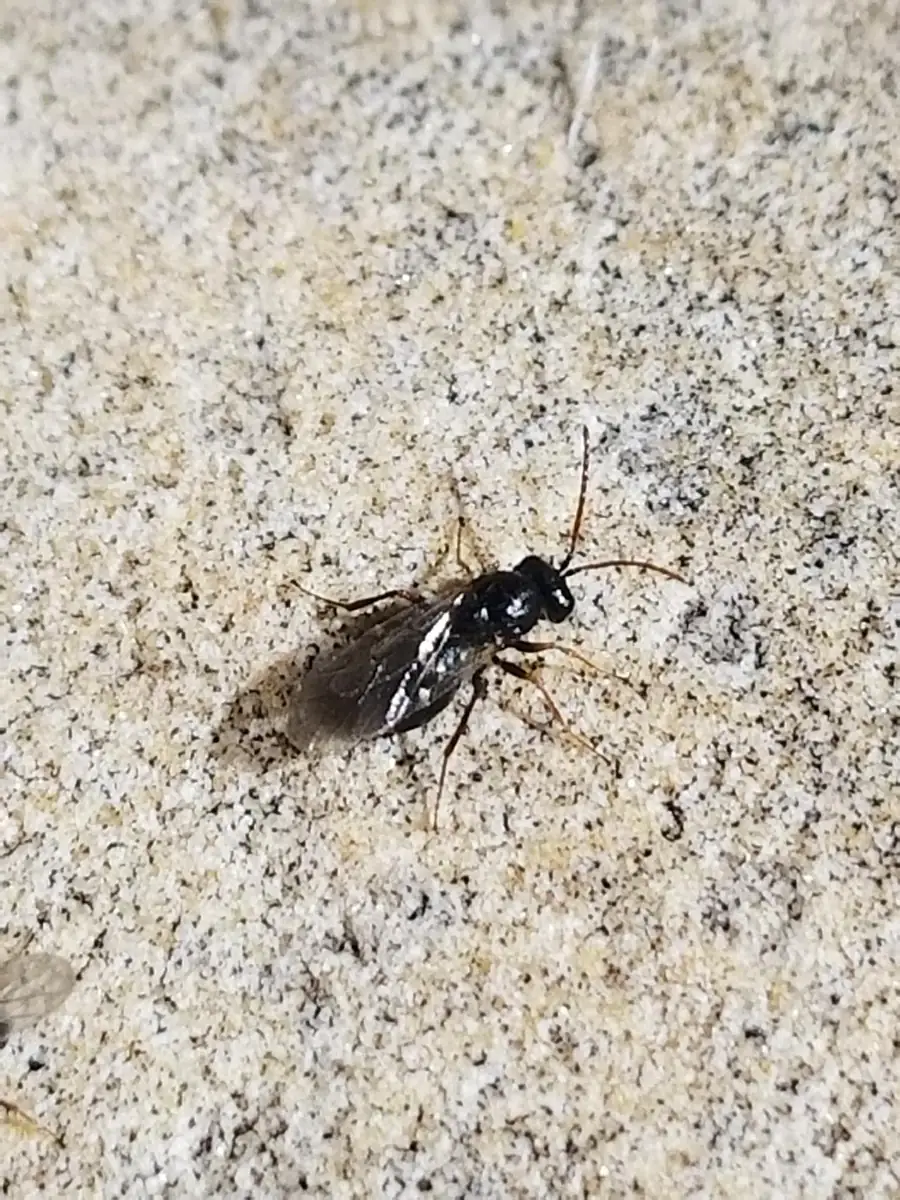
Aulacidea acroptolonica
Insects, mites and pathogens released to suppress specific noxious weeds as part of an integrated weed management program.
Biology
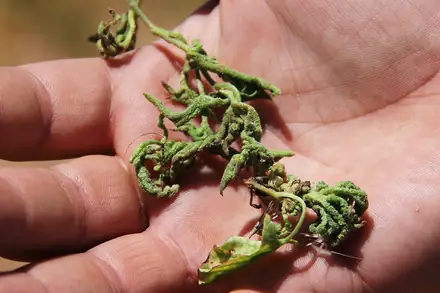
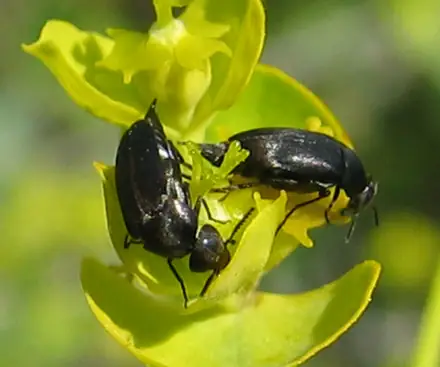
Gall wasps are small and black. They do not have stingers. Adults emerge in early spring around April – May. They lay eggs in stems. Microscopic larvae hatch in stems to form hard, pea-pod shaped galls. Larvae overwinter inside stems.
Destructive Stage
Larvae (galls in stems)
Impact To Host
Gall formation can impact plants by reducing resources to kill plants. It is still too early to determine overall impact to Russian knapweed. However, early results show high establishment and distribution rates of insects.
Redistribution
Collect dry galls infested with larvae in early spring. Hatch gall wasps in lab or quarantine and collect adult wasps for redistribution into the field.