Bermudagrass
Cynodon dactylon
Plants widely distributed in Utah. The current populations of these plants should be contained to halt their spread. These plants should not enter commercial channels.
Background
Bermudagrass probably came from Africa. It prefers warmer regions, but it is becoming established in cooler regions as well. It is posing a serious threat to crop production and turf management. It reproduces by seed, rhizomes, and lateral stolons, taking root at any node.
Description
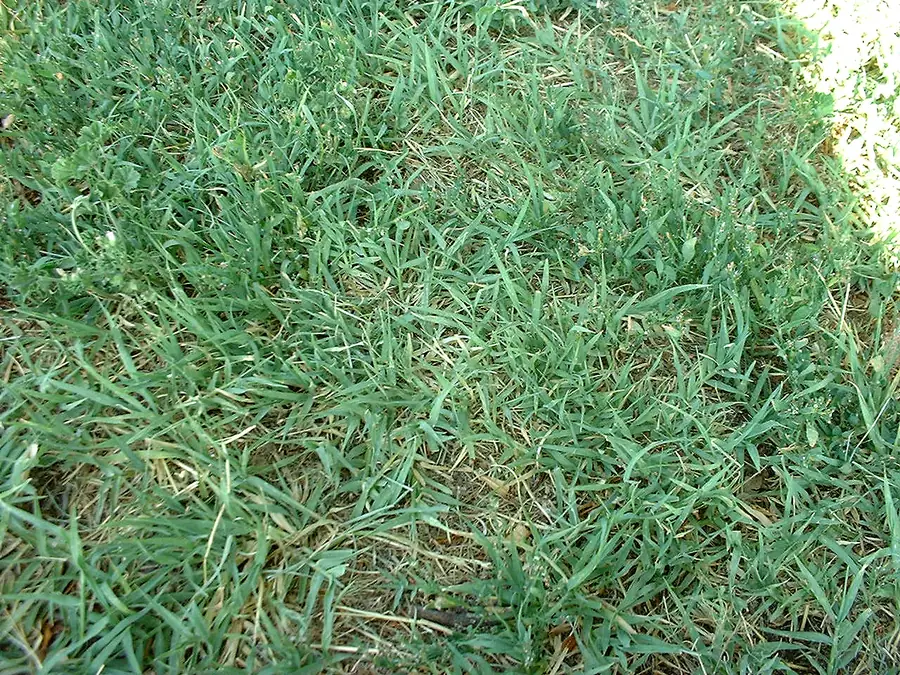
It is a low-growing and sod-forming perennial grass with stolons creeping along the ground and upright stems about 12 inches tall. Seed heads have three to seven terminal spikes, each about 2 inches in length.
Control
Herbicides can offer fair to good control. Tillage should not be used as a control.
*Bermudagrass is exempt from noxious weed classification in Washington County