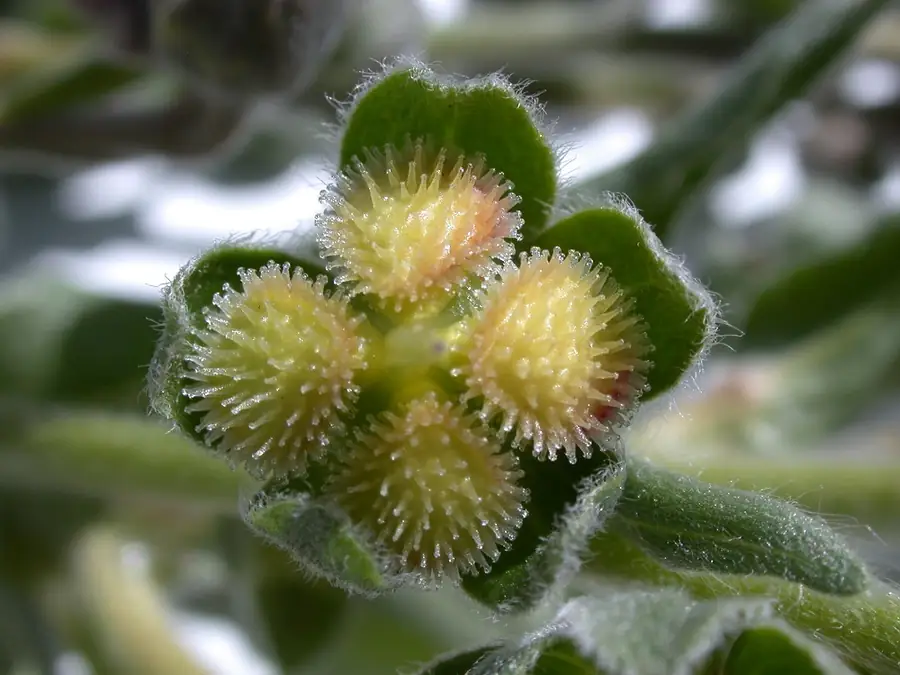
Houndstongue
Cynoglossum officinale
Also known as Gypsy flower
Plants widely distributed in Utah. The current populations of these plants should be contained to halt their spread. These plants should not enter commercial channels.
Background
Houndstongue is a native of Europe. It thrives in disturbed soils along roadsides, trails, in pastures, and rangelands. Because of the bur-like seed, it spreads widely along travel corridors as a passenger on clothing or animal fur, It is toxic to livestock.
Description
Houndstongue is a 1 to 4 foot tall biennial. Basal leaves are about 3 inches wide with a hairy surface. Upper leaves are narrower, about 1 inch wide and have a curled appearance and partially clasp the stem. Small reddish purple flowers form in the upper portions of the plant along stems borne in leaf axils. Each flower produces four green, bur-like fruits that turn brown as they mature. Bloom is in early summer.
Control
Herbicides can offer good to excellent control when applied between the rosette and bloom stages. Digging before seed development can offer good control.