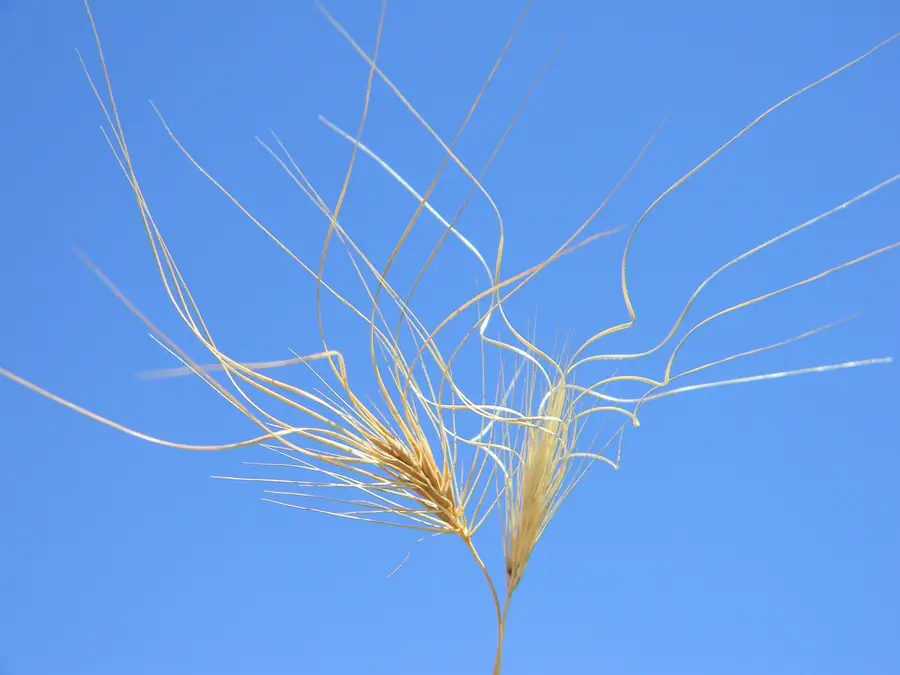
Medusahead
Taeniatherum caput-medusae
Also known as Medusahead rye
Plants that have a reasonable distribution in Utah, but do not occur everywhere. These should be given a high priority for control.
Background
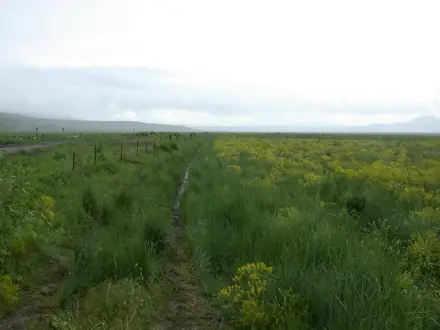
Medusahead was brought to the United States from Eurasia. It is extremely competitive, completely displacing other desirable grass species. It spreads by seed, commonly carried by wind, animals, clothing, and vehicles.
Description
Medusahead is an annual growing from 6 inches to 2 feet high. Leaf blades are about 1/8 inch wide. Awns of the seed head are long and become twisted as the seed matures. It is sometimes confused with foxtail barley or squirreltail, but is different in that the seed head doesn’t break apart completely as the seeds mature. Flowering and seed production take place in late spring and early summer.
Control
A combination of burning, herbicide, and reseeding offers the best control. For the best results, this should be done in fall through early winter.