Poison Hemlock
Conium maculatum
Plants widely distributed in Utah. The current populations of these plants should be contained to halt their spread. These plants should not enter commercial channels.
Background
Poison hemlock is a European native, growing 6 to 10 feet tall. It is commonly found along waterways, roadsides, and field edges and tolerates poorly drained soils. It has been mistaken for parsley and wild carrot. All parts of the plant are toxic.
Description
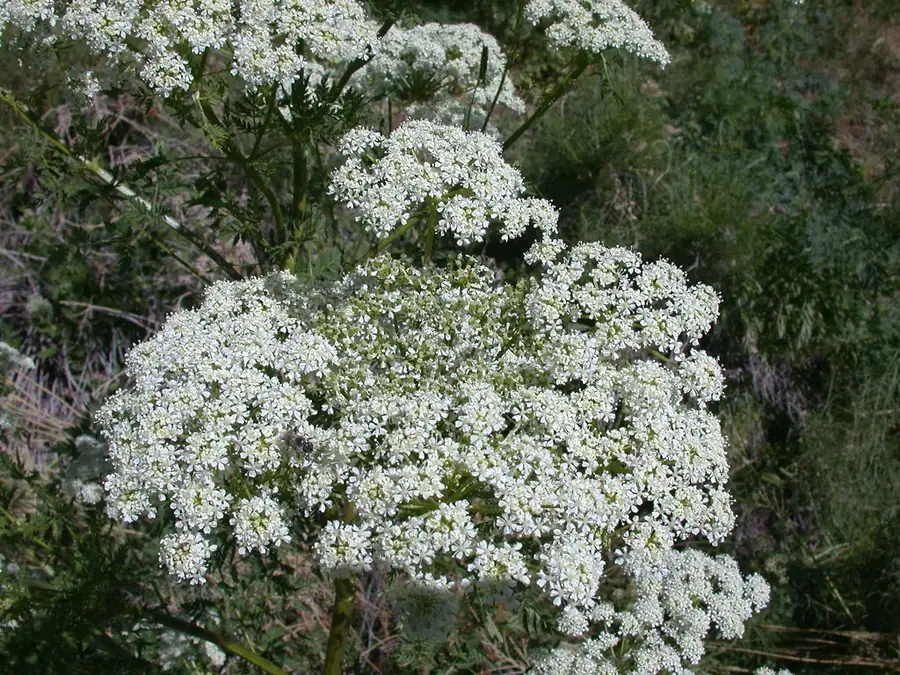
This biennial has a large taproot. The stems have purple spots, especially at the bases. Leaves are finely divided, having a fern like appearance. Leaf stems clasp the main stem. The tiny flowers are in umbrella-shaped clusters on the ends of individual stalks. Bloom is late spring into early summer.
Control
Biocontrol is available and offers fair to good control. Herbicides can offer excellent control when applied to actively growing plants between rosette and bloom stages.