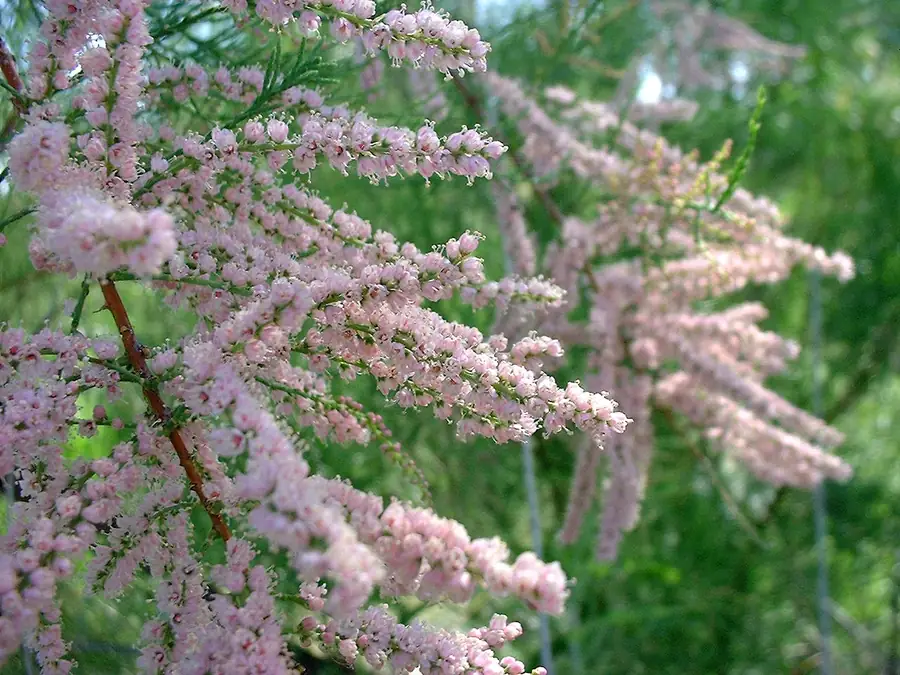
Saltcedar
Tamarix ramosissima
Also known as Tamarisk
Plants widely distributed in Utah. The current populations of these plants should be contained to halt their spread. These plants should not enter commercial channels.
Background
Saltcedar was introduced from Eurasia and is found throughout the United States. It is widely used as an ornamental. It commonly infests lake and stream banks as well as pastures and rangeland. Large plants can transpire 200 gallons of water per plant per day, drying up ponds and streams.
Description
This woody perennial plant grows 5 to 20 feet tall. Stems are reddish-brown. Leaves are small and scale-like. Branches are long and slender. White to pink flowers have five petals and are borne in finger-like clusters. The root system is extensive. Saltcedar may exhibit either deciduous or evergreen traits.
Control
Biocontrol is available. Select herbicides can offer excellent control when applied in late summer through early fall, especially after cutting or burning.