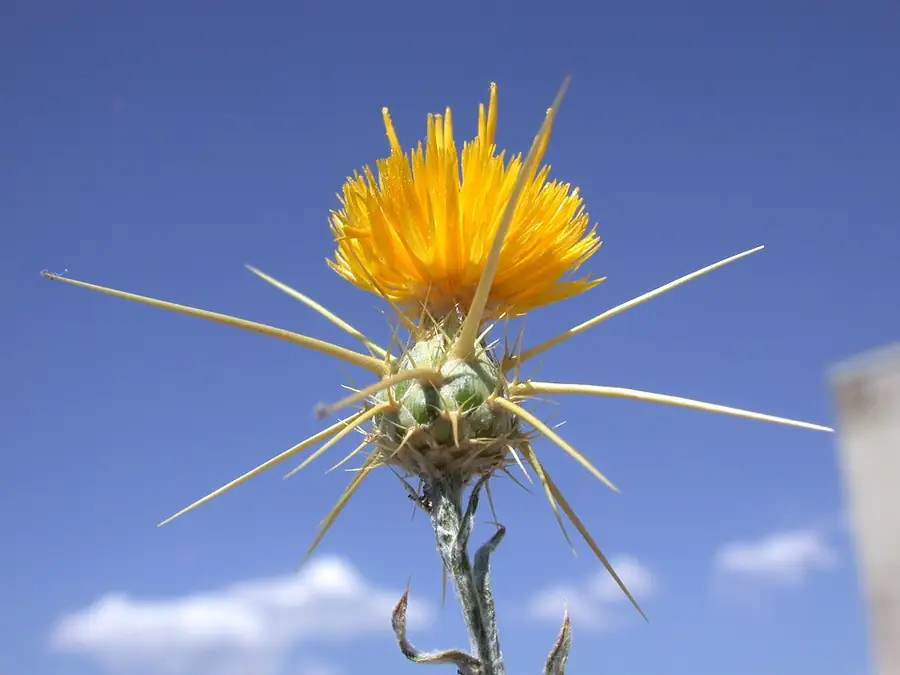
Yellow Starthistle
Centaurea solstitialis
Plants that have a reasonable distribution in Utah, but do not occur everywhere. These should be given a high priority for control.
Background
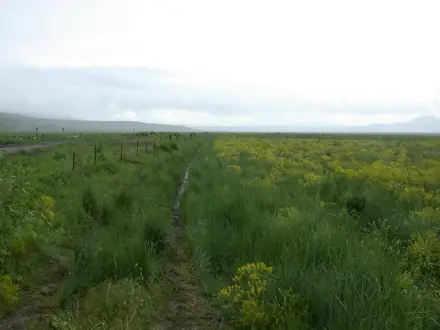
Yellow starthistle was introduced from Europe. It grows well on dry sites in rangeland, roadsides, and waste areas. It can cause “Chewing disease” in horses that consume it.
Description
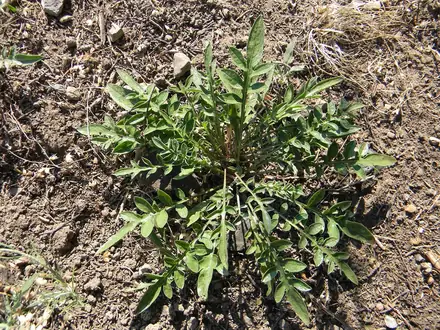
Yellow starthistle is a 2 to 3 foot tall winter annual with blue-green coloration. Rosette leaves are deeply lobed and could be confused with dandelion. Stems are winged and sparsely leaved. Flowers are yellow. Cream-colored thorns, ¼ to ¾ inch long, protrude from the flowering heads. Bloom is in early summer.
Control
Several biocontrol agents have been tested, but availability is limited. Select herbicides offer fair to good control when applied between rosette and bloom stages. Tillage is effective.