African Mustard
Brassica tournefortii
Also known as Sahara Mustard
Plants that occur in Utah at very low levels. It is a high priority to eradicate all known populations, and prevent new ones.
Background
Native to northern Africa, the Middle East, and southern Europe, Sahara mustard is drought tolerant and thrives in poor soils, especially sandy areas, roadsides, unused fields, and even native desert shrublands. It can form dense stands and also be a fire hazard.
Description
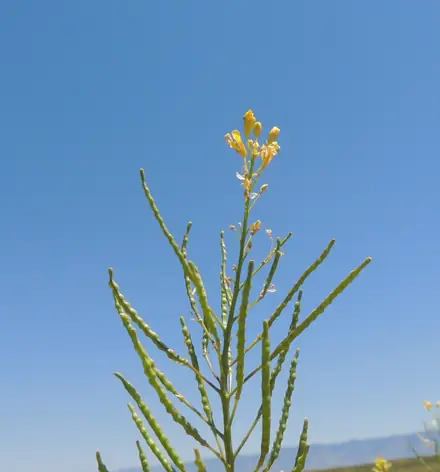
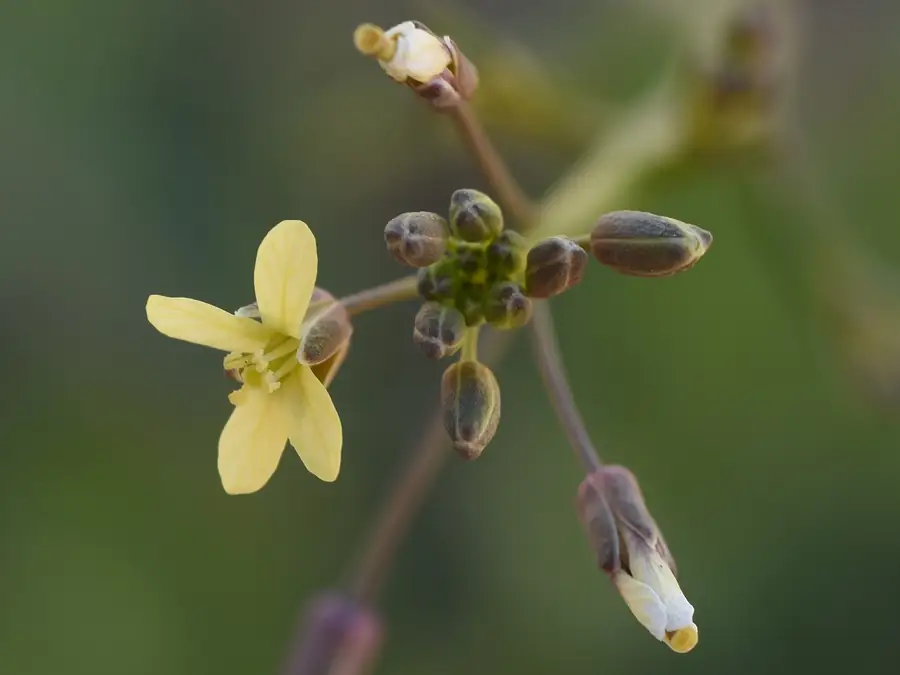
Sahara mustard is an annual. Rosette leaves are deeply lobed and can reach 12 inches long. Stem leaves are progressively fewer toward the tips. Stems grow up to 2 feet tall and are covered with stinging hairs. Sahara mustard usually flowers and sets seed very early in spring. Small, pale yellow, four-petaled flowers are borne in clusters on the ends of branches. Narrow seed capsules open when mature, releasing small seeds that are sticky when wet and impervious to water. When mature, the plant breaks off at the base and becomes a tumbleweed.
Control
Plants in small infestations can be pulled before seed set. Herbicides can be effective.