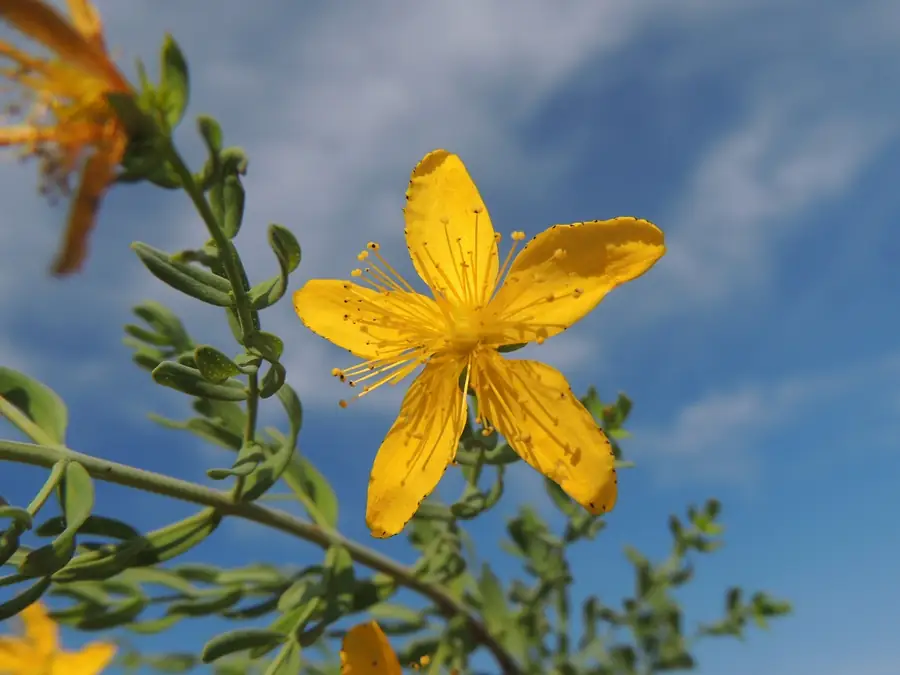
Common St. Johnswort
Hypericum perforatum
Plants that occur in Utah at very low levels. It is a high priority to eradicate all known populations, and prevent new ones.
Background
St. Johnswort was introduced from Europe. It invades areas with sandy or gravelly soils. Reproduction is by seeds and short runners. It contains a substance that is toxic (but rarely fatal) to white-haired animals causing them to develop skin irritations and often lose weight when exposed to sunlight. It is also a key ingredient of some popular dietary supplements.
Description
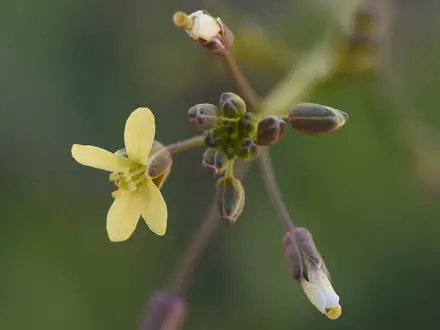
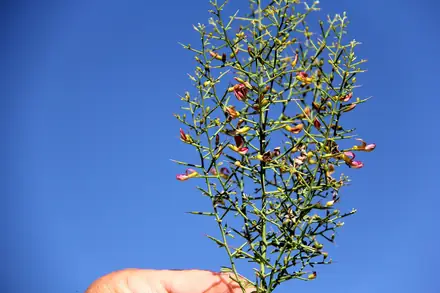
This herbaceous perennial grows 1 to 3 feet tall. Stems are rust colored and woody at the base. Leaves are characterized by prominent veins and transparent dots, visible when held up to light. The flowers are bright yellow with five petals.
Control
Several biocontrol agents are available and can offer good to excellent control. Herbicides can offer good control when applied to actively growing plants between rosette and pre-bloom stages.