Perennial Sorghum Species
Sorghum halepense
Also known as Sorghum-almum
Plants widely distributed in Utah. The current populations of these plants should be contained to halt their spread. These plants should not enter commercial channels.
Background
Johnsongrass was introduced from the Mediterranean as a forage grass, but when under frost or moisture stress, it becomes toxic to livestock. It reproduces by seed and lateral root systems. It thrives in rich soils and along waterways. A hybrid between Johnsongrass and grain sorghum (Sorghum bicolor), Sorghum-almum is similar in many ways to Johnsongrass, including toxicity. However, it tolerates drought better than its parent.
Description
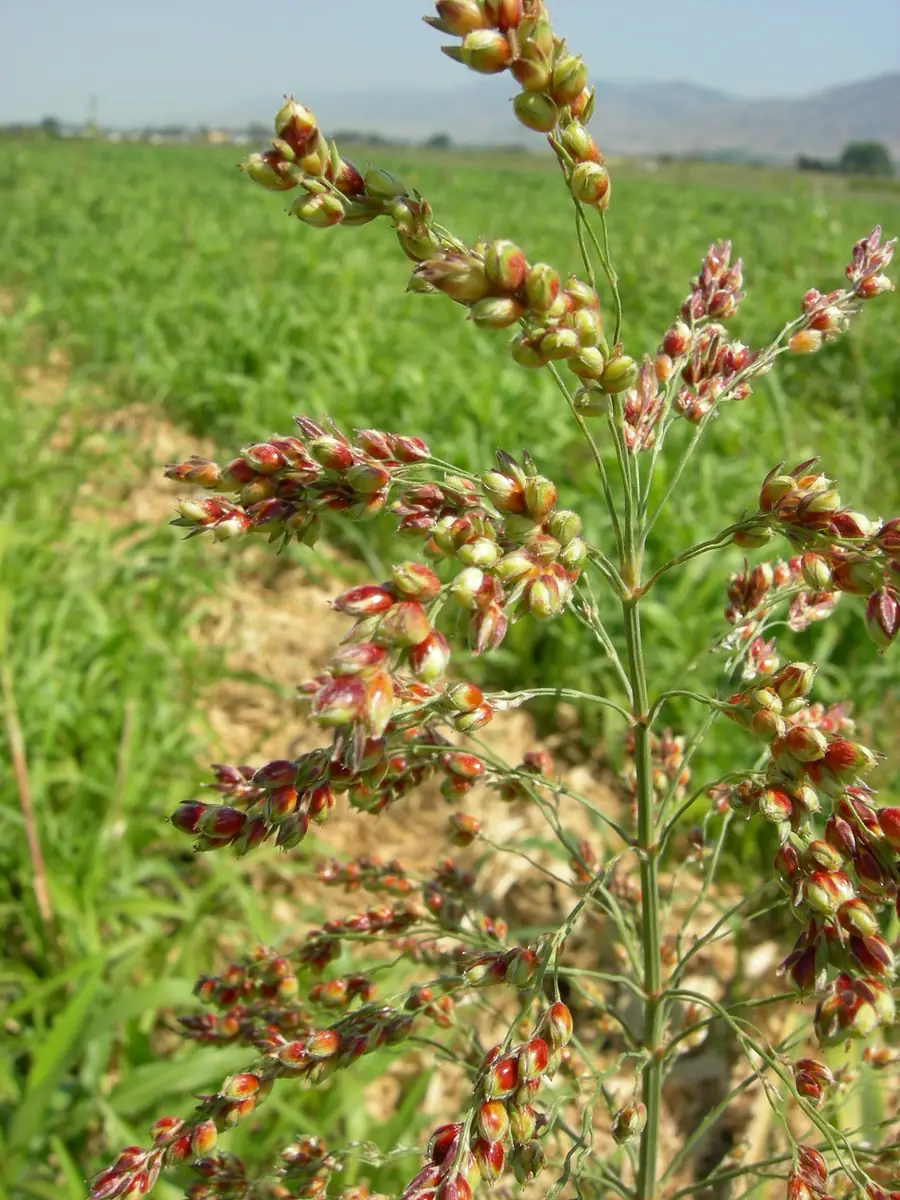
Johnsongrass is a hardy creeping perennial grass with large, fleshy rhizomes. Stems grow 2-8 feet tall. Leaf blades are flat, up to 1 inch wide, with a prominent light midvein and prominent nodes. Seedheads are reddish to purple. Sorghum-almum can grow up to 15 feet tall, with leaves up to 2 inches wide. Its rhizomes are shorter, have a general upward curve, and are not as aggressive as Johnsongrass rhizomes. Its seed heads are also longer and more open.
Control
Plowing gives effective control for Sorghum-almum, but more aggressive Johnsongrass is better controlled with herbicide.
.