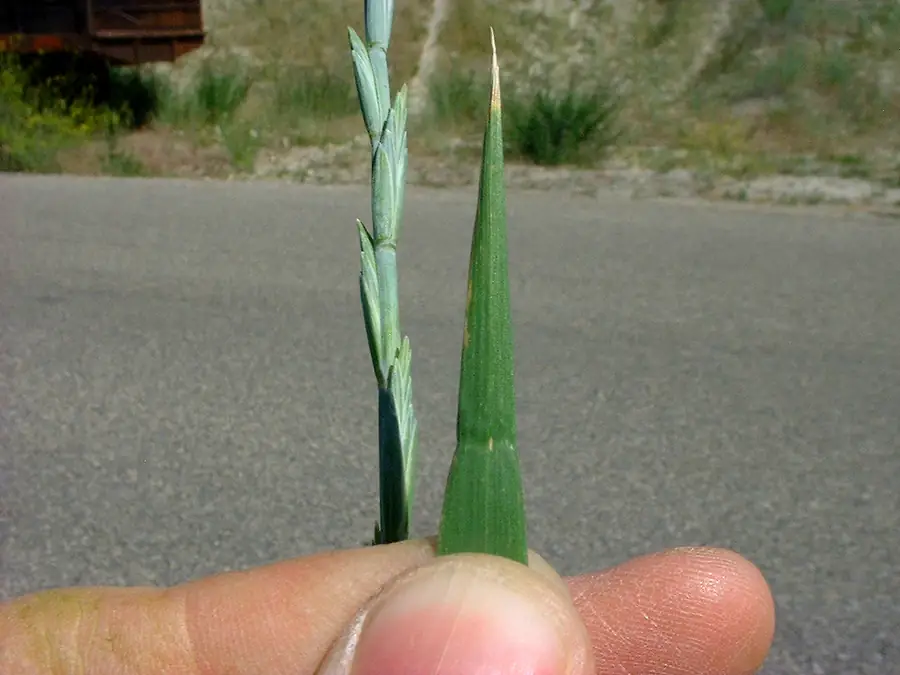
Quackgrass
Elymus repens
Plants widely distributed in Utah. The current populations of these plants should be contained to halt their spread. These plants should not enter commercial channels.
Background
Originally found in the Mediterranean area, quackgrass infests crops, rangeland, pasture, and lawns. It adapts well to moist soils in cool, temperate climates. It reproduces by seed and rhizomes. These rhizomes can penetrate hardened soils and even roots of other plants.
Description
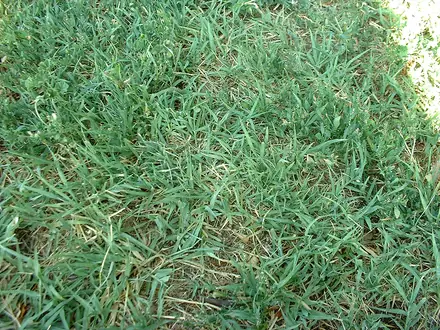
This creeping perennial grass usually grows 1 to 3 feet tall. Rhizomes are creamy colored and pointed. Leaf blades are up to 0.5 inch wide. Near the tip of the leaves a band-like constriction may be present. Seed heads are 3 to 4 inches long and narrow.
Control
Herbicides can offer good control when applied from early spring to winter.