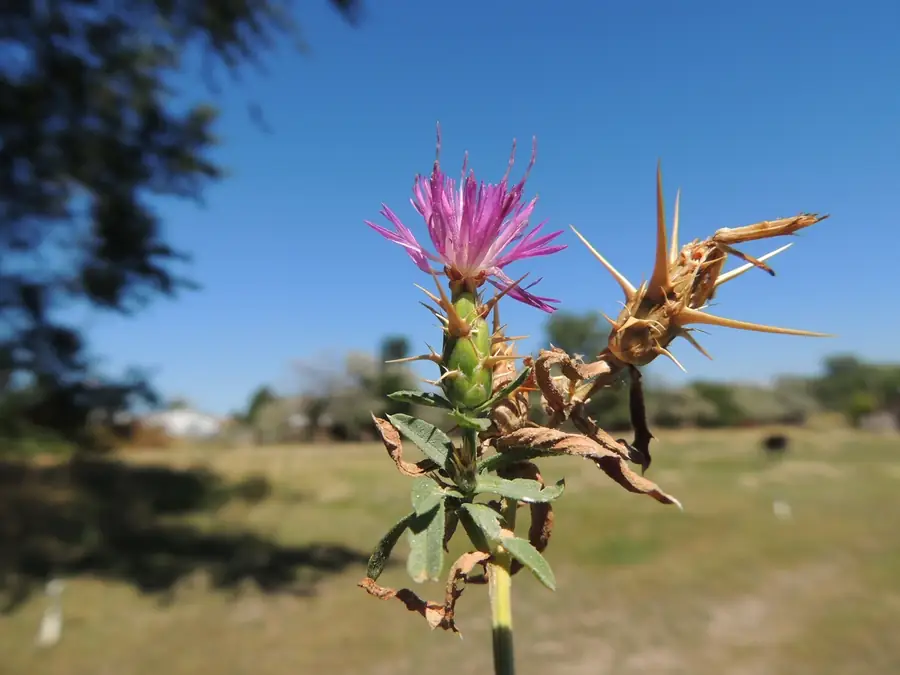
Purple Starthistle
Centaurea calcitrapa
Plants that occur in Utah at very low levels. It is a high priority to eradicate all known populations, and prevent new ones.
Background
Native to Eurasia. Purple starthistle is a weed in rangeland, grassland, fields, disturbed areas, and along roadsides. It is unpalatable to livestock, is tolerant to many different soil types, and can form dense stands.
Description
A tap-rooted biennial with branching stems up to 3 feet tall. Rosette leaves are deeply lobed, and the rosette has a spiny center. Young stems and leaves are covered with long, soft, fine hairs. Stem leaves are narrow, not lobed, and have resinous dots on the surface. Flower heads are purple with long, yellow spines below. Purple starthistle blooms throughout the summer. Seeds are dispersed by water, vehicles, animals, and people. Seeds can retain viability for 3 years.
Control
Small infestations can be controlled by digging, especially before seed production. Mowing encourages extra growth of the plant, and should be avoided. Herbicides can be effective.