Rush Skeletonweed
Chondrilla juncea
Plants that have a reasonable distribution in Utah, but do not occur everywhere. These should be given a high priority for control.
Background
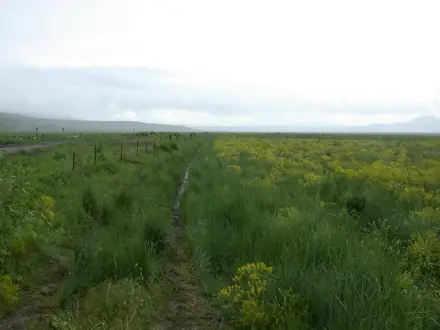
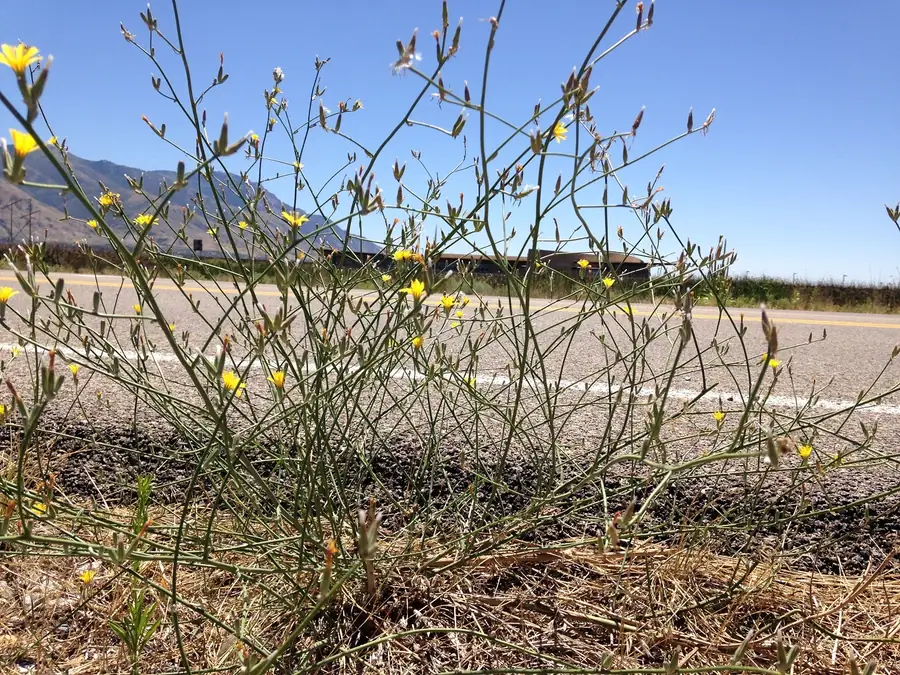
Native to Eurasia, rush skeletonweed is found in rangeland, cropland, pastures, wasteland, disturbed areas, sagebrush, and along roadsides. It tolerates drought and many different soil types, and also benefits from wildfires.
Description
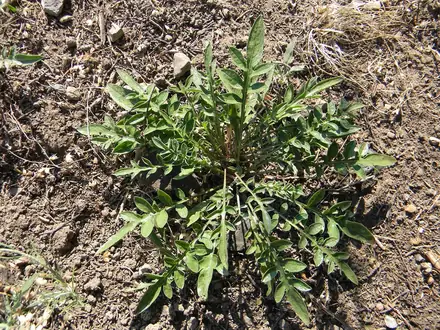
A deeply tap-rooted creeping perennial with stiff stems that grows up to 4 feet tall. The plant produces a rosette that dies back after stems develop. The lowest few inches of stems are covered in prickly hairs, and stems are nearly leafless. Plant parts exude a milky juice when damaged. Yellow flowers are dispersed irregularly among the branches. Plants do not need fertilization to produce seed, and root fragments can generate new plants, as well. Individual plants can produce 20,000 seeds, each with a small silky parachute, Stems die back in autumn.
Control
Repeated hand-pulling and tilling help control rush skeletonweed. Biocontrol agents may be available. Herbicides can be effective.